

Astrology Reports > Corporate Assessments
Astrology is often dismissed as a party trick, not a serious tool that provides serious insights. In the weeks since I've launched The Plan, I've had many people applaud me for following my own path, but comment that astrology is "not for them."
And until this year, I was one of those people.
I'm not writing this in an effort to gain converts (well, maybe a little bit). But as a strategist who deals mostly in the logical (but loves a good "what if") I, too, had to be convinced that what my birth chart reveals is valid from all angles - including the workplace. I thought there might be some other logical strategists out there who would enjoy my triangulation process.
And if you're intrigued, I'd love to meet you down in my network of rabbit holes.
The TriMetrix EQ Assessment
The TriMetrix EQ aims to deliver a three dimensional assessment of a person, and is a tool favored by coaches, consultants, and managers. It is often used to help determine a candidate's suitability for a specific team, or position.
Apparently unlike many corporate assessment tools, the TriMetrix EQ takes a three pronged "multi-science" approach, that assesses:
Behavioral style exploration: the how
Personal motivators + drivers: the why
Emotional intelligence: an assessment of the less quantifiable skill of understanding and having self-awareness around one's emotions, the level of competence in how one navigates and manages them, and their empathy and social skills: how the candidate manages their emotions in relation to other people
My mother is one of the business owners who had potential candidates take this assessment as a condition of the hiring process, in order to understand if their working style would mesh well with the rest of the team. When I returned from my time working for UNRWA in Jordan in 2016, unsure of what was next, she paid for me to take this assessment (note: that is my only relationship to this assessment or any company that provides it!).
I do remember there being a lot that resonated in the the readout for me, but once I found a new job, it was tucked away in a cabinet for years. One of the first things I did when I returned to the US from my brain detox this summer was track down that readout, curious how the birth chart analyses I had been immersed in stacked up.
The Hypothesis
At this point, I was deep in my newfound astrology hole, but still needed reassurance that it wasn't fun just because it was so self-validating. I couldn't be sure that I wasn't just taking away the parts that matched my preconceived beliefs about myself and leaving the parts that didn't fit the narrative I had crafted.
If the basic takeaways of my birth chart report aligned with the takeaways of my TriMetrix EQ report, I felt that it would serve as definitive proof that not only does your birth chart provide the same information as these expensive tests, but that this idea that who we are in an office 40 hours a week could somehow be compartmentalized from who we are outside of the office was, if not impossible, at least inauthentic (sorry, Severance).
I uploaded both PDFs and asked ChatGPT to analyze the similarities, differences, and any major discrepancies between the two documents.
What it revealed is a remarkable overlap: "both highlight creativity, charisma, people-centered leadership, optimism, independence, and the need for recognition. Both also caution about indecisiveness, scattered focus, and over-reliance on charm versus discipline" (ok that last one is rude).
Language Matters
I was not surprised that the astrological report used different language than the corporate report. What was surprising, however, was how much that language changed the way I felt about what was essentially the same information.
For example, astrology frames the information it presents as insights into my life purpose and inner drive: eg idealism, independence, and empathy.
TriMetrix puts similar information into more clinical terms, focused strictly on workplace behavior: eg over-emotional, time-management struggles, and potentially distracting people-focus.
See how the framing of the first focuses on what makes me unique and human, while the other uses language that makes these traits seem like potential liabilities?
Here's an example that focuses on the topics of discipline and structure:
The astrology report emphasizes how my ambition and determination are amplified when I am engaged in work that I feel is meaningful. It cautions that idealism around a goal can at times blur practicality, and also flags that this disciplined work ethic and habits could border on rigidity and restriction.
The career-focused report says that my idealism around work that matters can lead to day-dreaming, getting lost in vision over detail, possible under- or over-management of team members. It categorizes these things as "time-wasters."
On the topic of decision making, the astrology analysis suggests restlessness, conflict avoidant, and emotional sensitivity, while TriMetrix warns I can be overly-enthusiastic, impulsive, and talk more than I listen.
For better or worse, there is nothing inherently inaccurate about any of the preceding statements, but only one framing makes me feel like these are personal failings that render me a bad investment.
In fairness, I'm deliberately showcasing the negative. I have a lot of positive traits that make me an asset as a team member, and as a human. But the discrepancies in the framing of these more desirable characteristics don't sting in the same way. Let's face it: I'm not mad about being categorized as someone with "progressive vision" or as a "megaphone for new ideas."
But what I love about the astrological framing is that even the more sensitive parts of my personality or less universally applauded behaviors are presented with asset-based language, rather than deficit-based language. It presents these as MY superpowers, that I can let others use against me, or that I can harness for success on my terms.
My idealism, emotional sensitivity, and restlessness are what drive me.
I rebel against traditional frameworks because I can see 5 steps ahead and am not content to wait for everyone to catch up.
I need the independence to lean into rebellious thinking, move at the pace and according to the values that motivate me.
My ambition and focused drive that has so often been exploited in the name of billable hours in fact suggests eventual mastery through discipline, when I am working towards something I believe in.
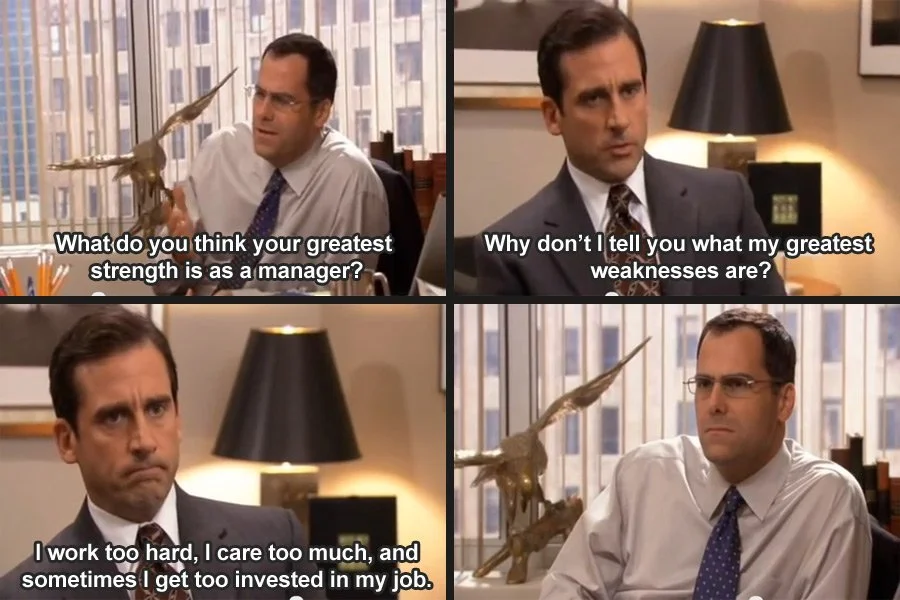
At the very least, it gives me a new way to answer the age old interview question: tell me about your weaknesses.
The "So What"
Perhaps the most eye opening paragraph from this side by side analysis talked about the implications of the similarities in these documents in a way that helped me understand what my next steps should look like.
It recommended that:
My natural charisma, communication skills, and the ability to inspire trust are ideal for branding, community-building, and visionary leadership
My creativity and diplomacy give me a unique edge in marketing, storytelling, problem-solving, and mediating between different groups
My desire for independence and leadership make me well suited for unconventional work environments and styles
It told me to watch out for:
Overcommitting or scattering energy across too many projects
Avoiding conflict at the expense of my own needs
And suggested that I completely avoid:
Highly rigid, rules-driven environments with little room for autonomy
Roles requiring constant confrontation or emotionally draining conflict
Work where recognition, creativity, or meaningful people interaction are absent
This helped cement the notion I had already come to accept by that point: a traditional role with rigid corporate structures, where boundaries were a nice to have and unconventional styles of working were approved on a case by case basis, was not an environment that supported my best work.
Read closely enough, TriMetrix report says the same in a different way, but it speaks to an employer, not to the employee. That assessment doesn't exist to help me grow, it exists to make me easier to manage.
What's Your "So What"?
Personally, I prefer the framing that doesn't make me feel ashamed for any part of who I am, while also helping me understand how I can navigate the areas in my life where I may have a bit more difficulty.
While I have to date, had the luxury and privilege of not returning long term to that environment, if that hadn't been the case, I would at least be doing so armed with more than just my gut feeling that this wasn't the right fit. I would know where to look when I inevitably ran into challenges, and hopefully it would have eased the sting of feeling like I was the one who kept coming up short. It may have even given me insight into ways to work with my manager to create adjustments in my day to day that improved overall working relationships.
But ultimately, I want all parts of myself to be celebrated as unique and special, not sorted through like a shoebox of scraps where only the parts that can create value for someone else are selected and the rest are set aside as immaterial.
So there you have it. I hope that your logical strategist has been satisfied, and that your "what if" strategist has sat up a little straighter. I'd love to give you a tour of my astrology-is-everything rabbit holes. You can start your own journey by ordering your personalized Insights into Action Workbook, that is based on YOUR birth chart.
Astrology has a steep learning curve, so for the purposes of getting to the "so what" faster, I've scrubbed the workbook of anything that might be over the head of a layperson. What's left is pure insight, and a straight line to strategy.
The section I am most proud of is "Cultivating an Environment Where You Will Thrive," which is inspired by this whole process, zoomed out to a more big picture view.
Because rather than finding a lifestyle that can fit around the demands of our careers, we should be focused on designing a LIFE where we can thrive, and trust that within those parameters, the right work environment will find us.