

Recently, I've been recalling one of the many sports phrases I was happy to leave in the dust of my corporate jailbreak: block & tackle.
In advertising, you can't get through a meeting during budget forecasting season without hearing it at least twice. During this "brand planning" period, agencies are tasked with conceiving of and pitching several "big ideas" to help clients make a splash in the upcoming year (and of course, get us a bigger budget).
There'd always be some cutting edge (and questionably realistic) interactive tech buildout for an industry conference, maybe a celebrity partnership, or a multi-platform integration proposal. Naturally, these big ideas carried bigger price tags, and while clients wanted to see that we could think big, they were rarely interested in paying for it.
[Hmm, after deleting a multi-paragraph rant on the sadomasochism of brand planning season, it occurs to me that I may still have some work to do on healing my corporate wounds!]
Block & Tackle
The "block & tackle" part of the budget proposal, however, is neither sexy nor innovative.
These line items do not win awards, they do not get added to anyone's LinkedIn portfolio, and none of the senior executives show up at the meeting to pitch them to clients.
But block & tackle is what keeps the brand running: the brochures that need to be updated with new data, the website that needs to be maintained, the social media ads, ongoing strategic monitoring, market research, etc..
And one thing about block & tackle - no one wants to spend money on it, because when done well, the results are invisible.
And yet, we all have stories of clients who had to add that money back into the budget halfway through the year because it turns out that your brand falls apart without competent handling of the basics.
Calling back to the football origins of the reference, you may get a handful of ESPN-worthy plays over the course of a three hour game, but the majority of those minutes consist of (well, commercials, and) two teams blocking and tackling each other as they make incremental progress up and down the field. It's not especially sexy, but if you stopped paying the salaries of the defensive line, you wouldn't get any of those ESPN-worthy moments.
What does Block & Tackle have to do with Astrology?
I was on a call with a friend the other day who had just confirmed her birth time and was jumping around to the different parts of her chart, trying to understand what it all meant. She immediately started rattling off the names of asteroids that I’ve only just started learning more about, asking how what was currently going on in the sky was impacting her, and various other questions that, while valid, are exactly the kinds of rabbit holes that can turn an initial interest in astrology into a "this is too complicated for me" pass.
Naturally, I pulled her chart up in my professional software, which gives me the option to add literally hundreds, if not thousands, of points to a chart.
However, rather than adding anything to the standard view, I subtracted. I took away all the planets, asteroids, mathematical points and stars until we were left with a blank natal wheel.
Then, I added her Sun, Moon, and Ascendant (or Rising Sign) back to the image, stopping there, using only 3 of the ~15-20 "standard" points plotted on a chart to guide the rest of our conversation.
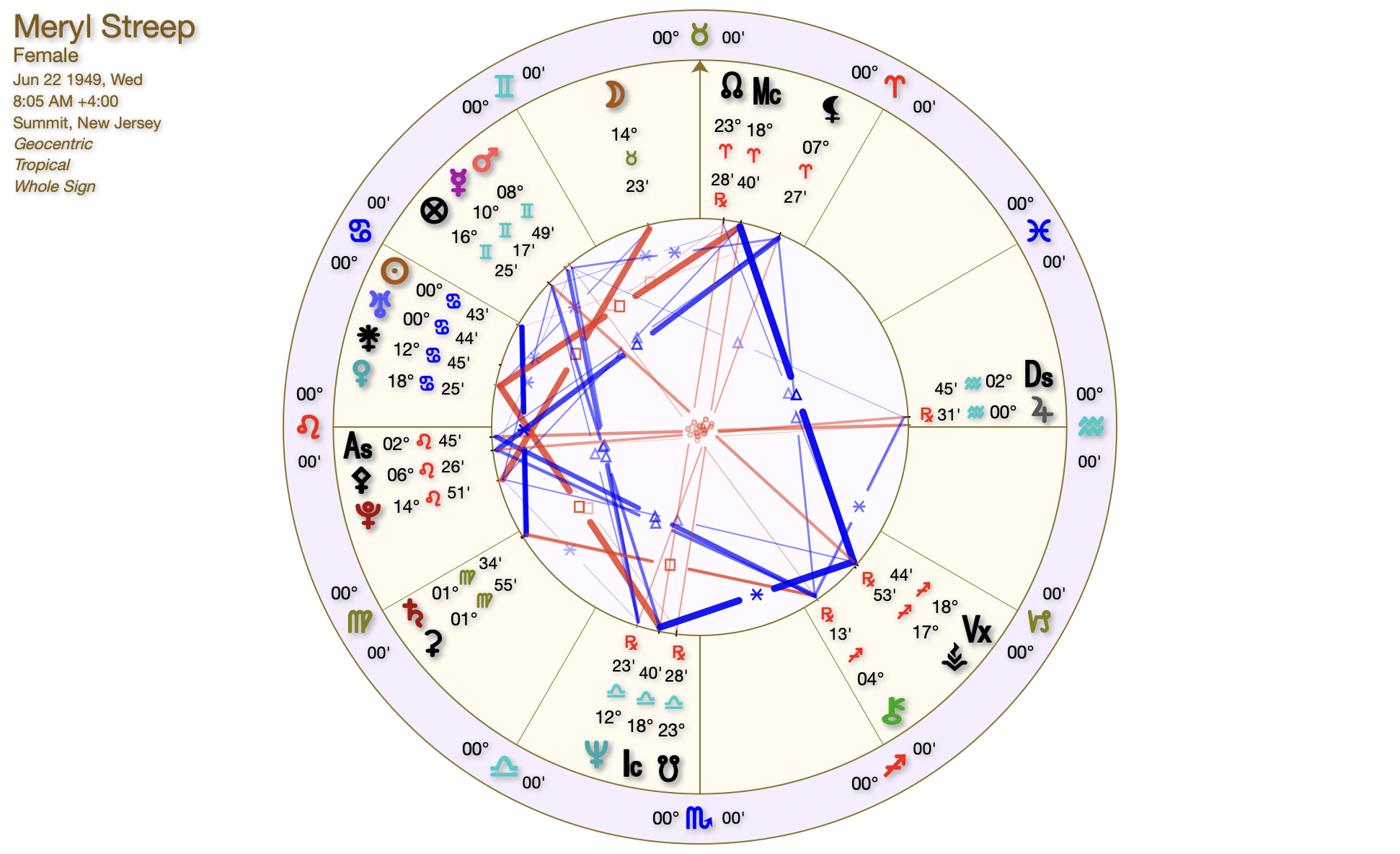
The “standard” view of a chart can have between 20-30 points
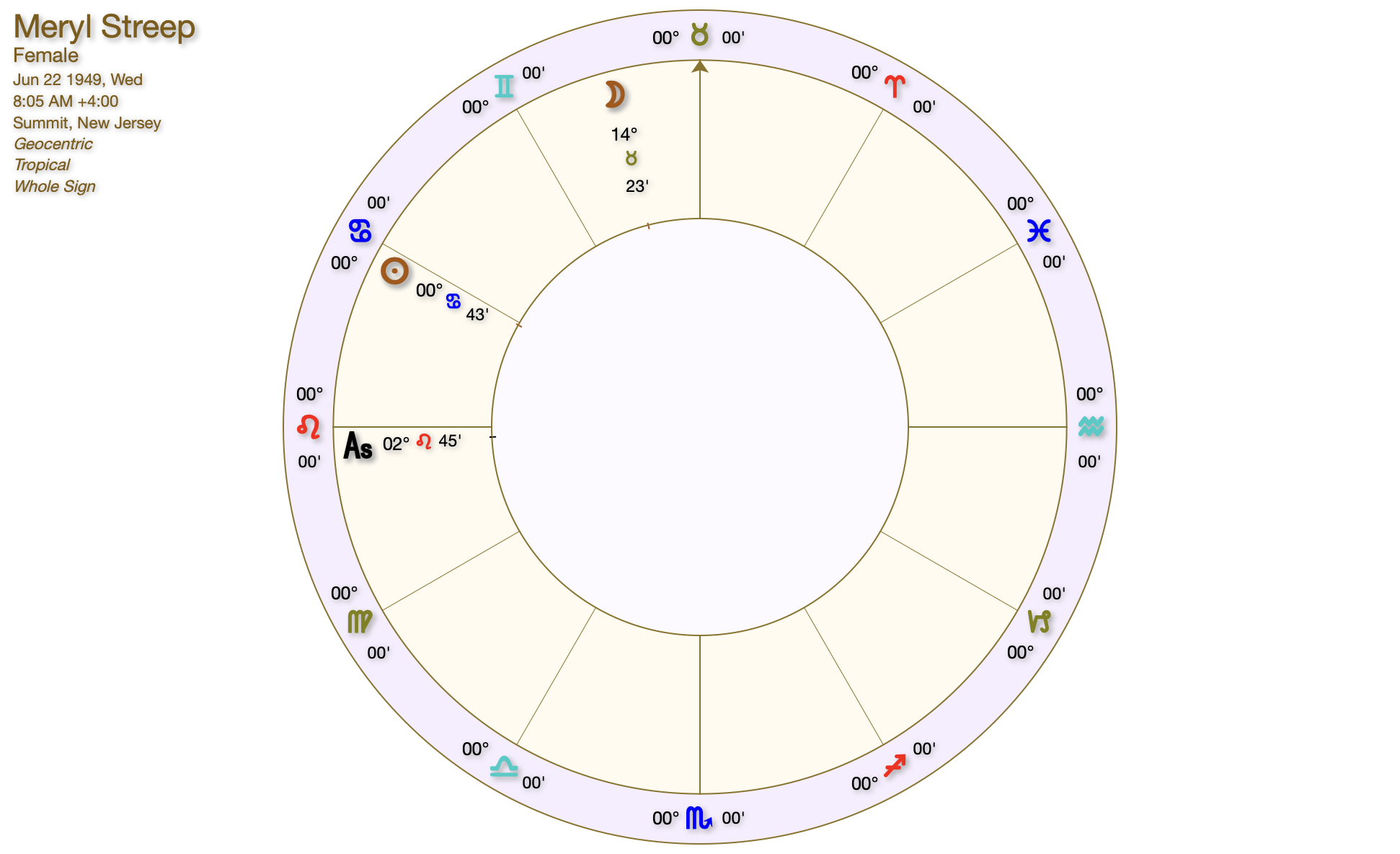
It’s less overwhelming to digest three of the most important placements on their own
In our excitement to learn absolutely everything we can about our personal astrology, we often sideline (pun intended?) the less sexy, and yet, absolutely crucial, building blocks of astrology.
If you don't have a working grasp of the block and tackle, you won't have the foundation you need to support the exploration of more interdependent components and esoteric concepts.
In the same way that a football team requires more than a defensive line to play a game, three placements will not provide a comprehensive understanding of your birth chart, but a these basics are essential to a comprehensive understanding.
Master the block & tackle with a “Big Three” reading
I've recently launched a "Big Three" Natal Chart Overview reading, where we will spend the call breaking down the dynamics of your Sun, Moon, and Rising placements, without getting distracted by the visual clutter of the complete chart. It’s not the whole story, but it’s a necessary first step to understanding it.