

The Power of Place: Let’s talk about Uranus
I’ve found the best way to illustrate the beauty of astrocartography and the power of place is through real examples. This is the first installment in a series where I share stories from 20+ years of travel across 35+ countries. If you’re interested in learning about the most meaningful places in your story, you can book a reading with me here.
Don’t have time to read 3,000+ words? You can listen instead. It’s not AI, so it’s basically like listening to a 22 minute voice memo :)
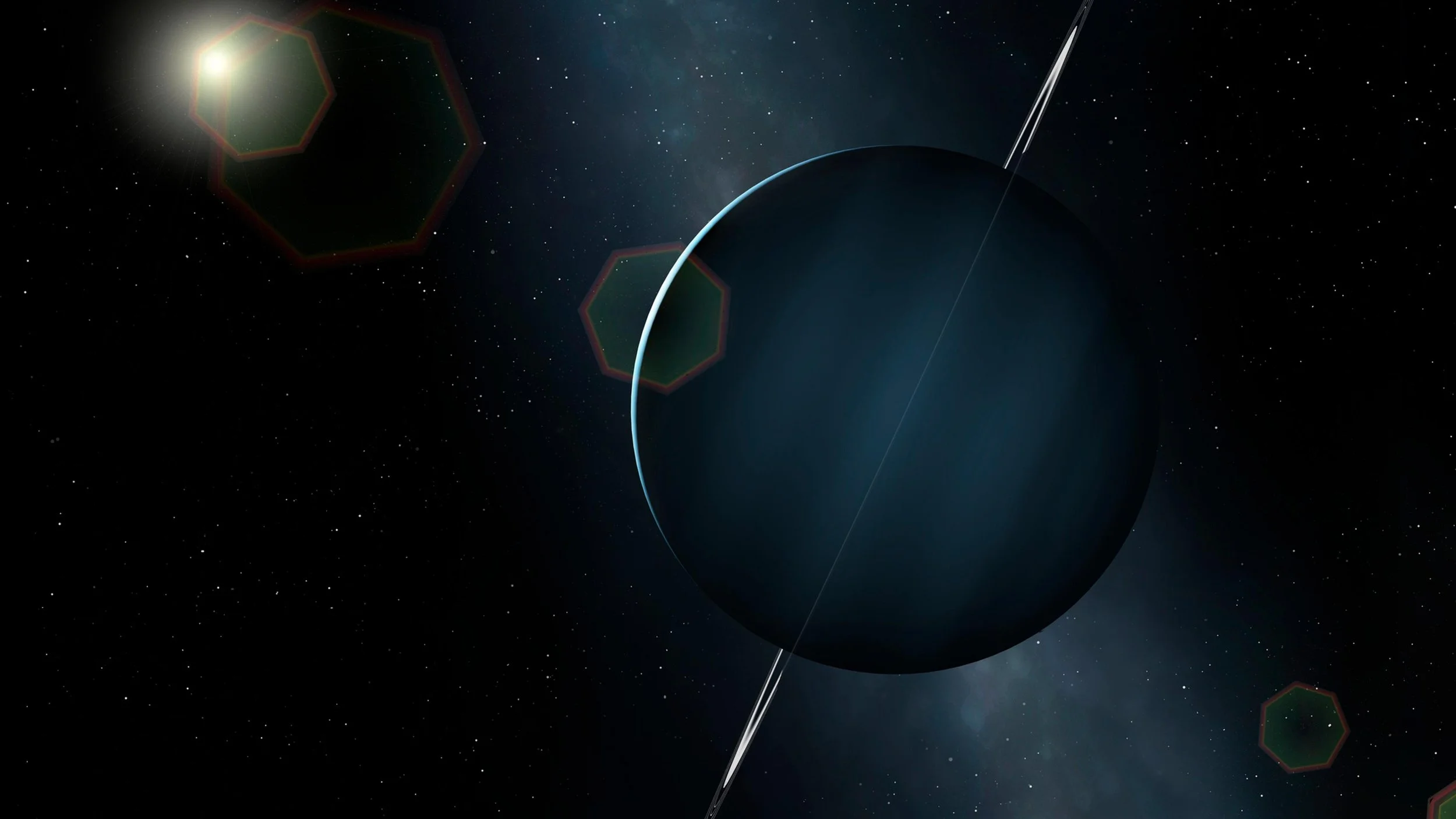
Now, now. Let me make one thing clear to all of you kids out there that giggled when you read the title of this article. It's pronounced URIN-us. Grow up!! :)
Uranus loathes the status quo. It's innovative, rebellious, and eccentric, but also disruptive, and at times unhinged. It is a brilliant genius, or a rebel without (and sometimes with) a cause. It pushes urgently and suddenly towards the new and uncomfortable, whether you're ready for it or not. It does things its own way; it bucks convention in search of the exciting.
Even its orbit is chaotic. It is the only planet in the solar system whose equator is at a 90 degree angle to its orbit, which makes it appear to spin sideways. It also rotates backwards.
You know that kid on the soccer field who's off in left field wearing a tutu and mismatched socks, picking flowers or doing cartwheels, completely ignoring the game they're supposed to be playing? She's giving Uranus.
Uranus takes approximately 84 years to orbit the earth, spending about 7 years moving through each of the 12 signs in the zodiac wheel, which means that most people born in a ~7 year period will share a Uranus placement in their chart. Along with Neptune and Pluto, Uranus is considered an "outer" or "generational" planet, because the slowness with which it moves means its significations flavor the collective movements and attitudes of a large group of people of the same age.
In your personal chart (as a general rule), Uranus is less likely to influence your day to day behaviors and expressions, and more likely to shape the overall world view within which you came of age.
Uranus in 80s Millennials
The first half of the millennial generation was born while Uranus was moving through in Sagittarius in the sky. That means that everyone born from February 1981 - February 1988 (with some exceptions, but for argument's sake), has that “IDGAF let's get weird” energy of Uranus expressed through the filter of a slightly unhinged fire sign.
The Uranus in Sagittarius cohort seek to create and evangelize new visions of what's possible for humanity, and the collective. They introduce new concepts of philosophy, religion, and ethics, “hacking” the system in service of making a positive change in the world.
And doesn't that track? Early 80s babies are the TOMS, 3 Cups of Tea, WarbyParker, Occupy Wall Street, and KONY2012 generation. We watched the Twin Towers fall in chemistry class then used our idyllic memories of the “before times” and an early grasp of technology as fuel to bring about the change that we wanted to be in the world.
We grew up talking to our friends on landlines, and went on to create apps that let us find dates with the swipe of a thumb. While Facebook, Instagram, and Airbnb are perhaps less humanitarian in nature, they continue to push the boundaries of what global connectivity could look like.
In hindsight, did we make some pretty cringey mistakes, some of which caused real damage? Absolutely we did. And we also redefined what it means to be global citizens (oh right, I attended several of those celebrity-laden concerts.. but I still don't know what they actually did with our money..); what a more equal future could look like.
Look. We stumbled so that 90s millennials and Gen-Z could self-righteously step on our backs, use our piled up bodies to aim higher (and perhaps more precisely), while simultaneously criticizing our tone deaf white-savior complexes.
What? I'm not feeling old and bitter. You are.
The Role of Uranus in My Journey
This context makes my own Uranus stories that much more powerful and illustrative of how astrology is more than a bunch of boo-hockey (that's right, watch me double down on niche early millennial references out of spite), but that it can reveal a lot about who we are at our core.
An early discovery that two of the most meaningful and impactful - yet unrelated - phases in my early career fell along the same Uranus astrocartography line was actually the catalyst for learning more about the technique in the first place.
So, I suppose I have Uranus to thank for quite a lot in my life (don't lie to me, you read that the dirty way, didn't you?)
Kenya: 2009-2011
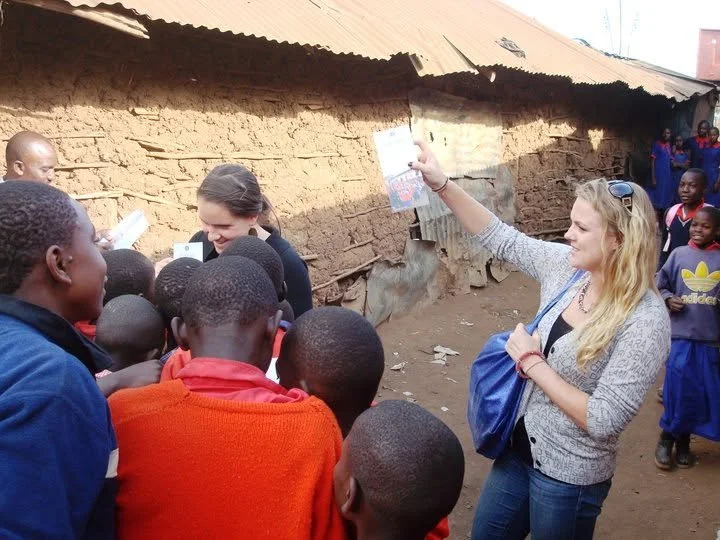
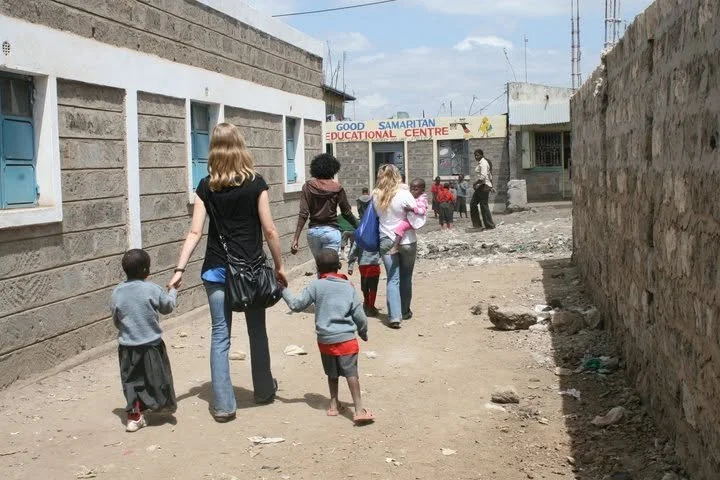
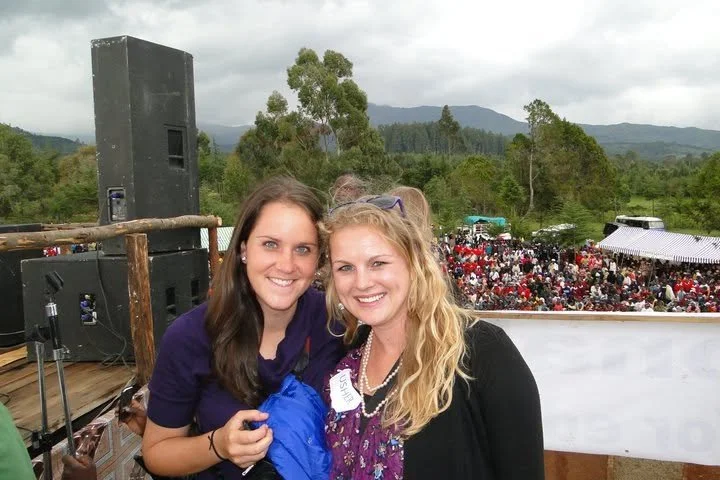
In November 2009, a freshly 25 year-old Hannah flew to Nairobi, Kenya, and took a bus 90 minutes north to a village called Njabini, in the foothills of the Aberdare Mountains. I spent the next 6 months in the company of 16 beautiful children who were either orphaned, or otherwise in situations where they did not have proper caregivers, and the staff that treated them as their own. I came face to face with the reality of global poverty for the first time in my life. I learned about gender roles and cultural norms in different cultures, and, often in the same breath, wept and wondered at the beautiful fragility of life.
It was not an easy time. As previously stated, I was one of many who made some missteps born from good intentions. Fortunately, in my case, any negative consequences of those missteps were largely born by me, and not the people I was there to serve, and my contribution to the improvement of the lives of many families in the village was a net positive.
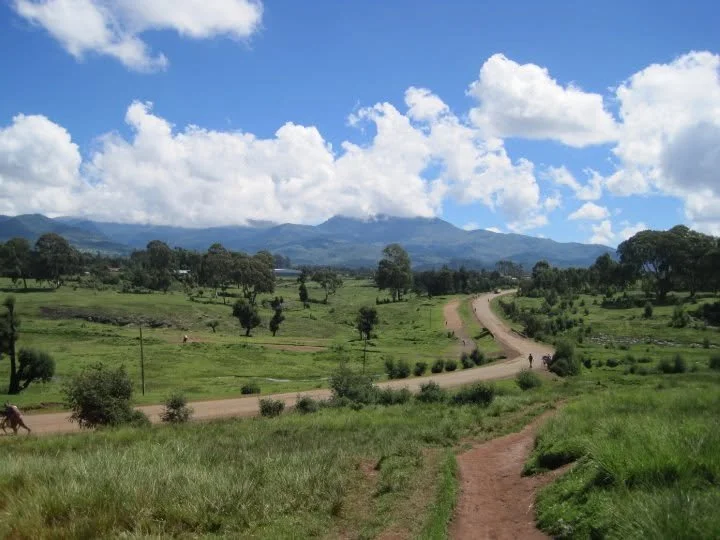
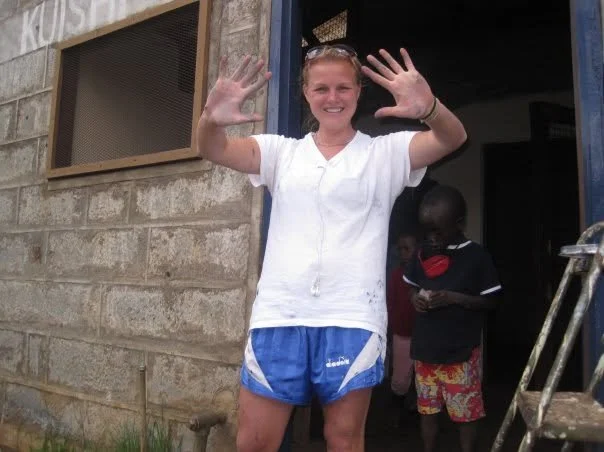
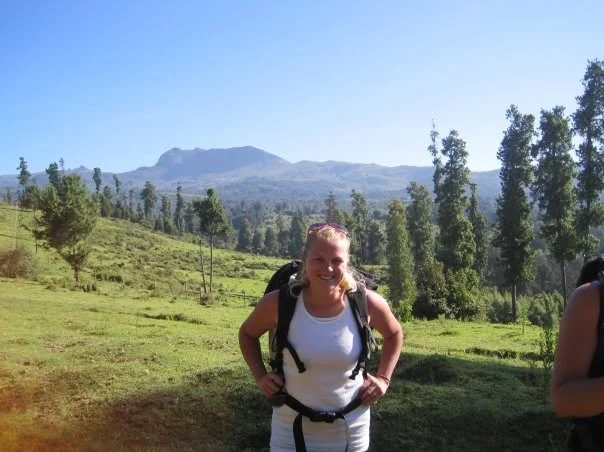
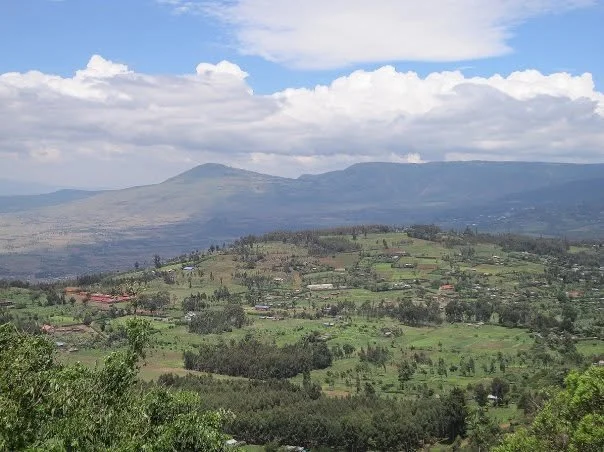
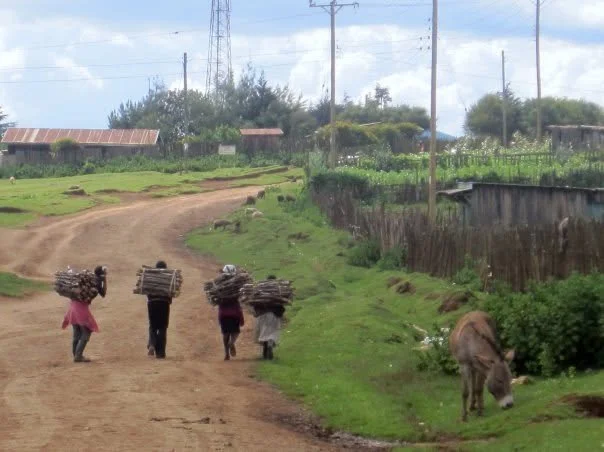
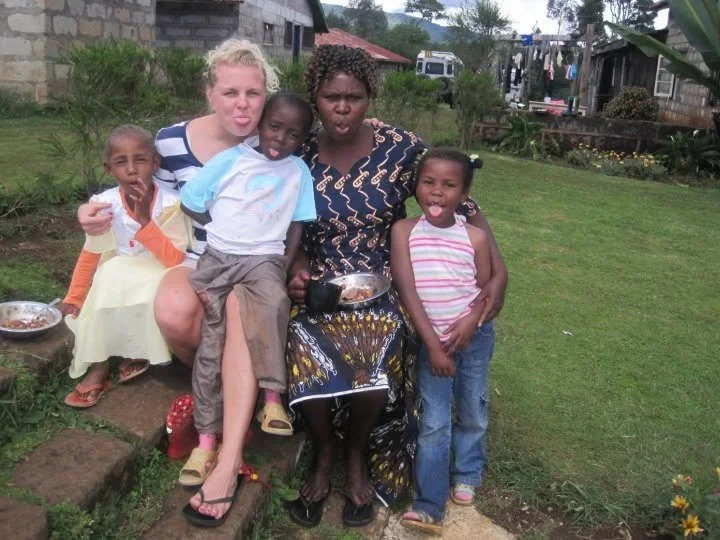
Ultimately, I emerged a better, stronger, and more empathetic citizen of the world. My hands on education made me a more informed and effective advocate, and I shifted from volunteer to employee upon my return to the States (employee in name only.. NGOs gonna NGO), and returned the summer of 2011 to lead some outreach work in Nairobi.
The values I began to cultivate doing this work ultimately led me to my next life milestone: enrolling in grad school for my Masters in Public Health (sleeping in a bunk bed in a definitely not fire code compliant railroad apartment at 27 just wasn't cutting it, and I was not internally conflicted about my desire to be compensated well for my work, even at a non-profit, but that's a separate rant).
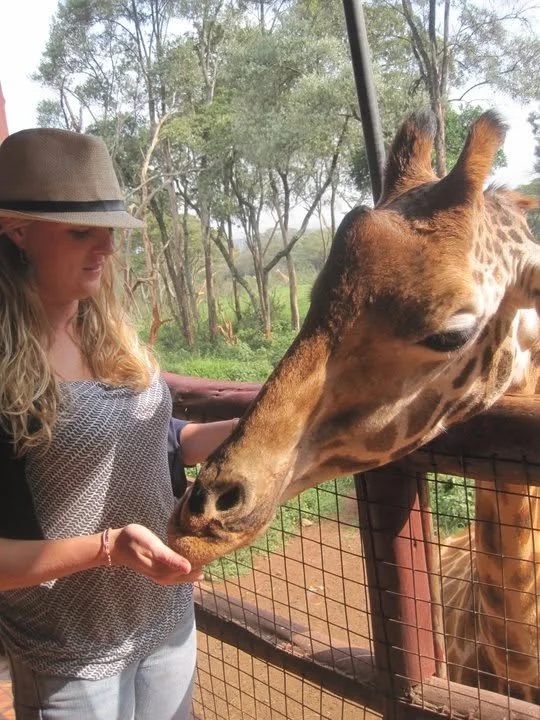
My time in Kenya was one of the first authentic experiences I had as an adult. It was not predictable, it was not easeful, and it was full of emotional rollercoasters. It pushed me into situations I was neither prepared nor qualified for, and forced me to rise to meet expectations. And it was a beautiful and inspiring time that brought me face to face with elephants, and giraffes, and the excited smiles of children greeting me upon my arrival back from a trip to Nairobi, desperate to know which bootlegged DVDs I had brought for them this time. The Tooth Fairy, starring The Rock was a favorite, but a classic like Home Alone was a guaranteed crowd pleaser. I began writing in earnest, with my very first travel blog, and discovered to the chagrin of many (mostly my sister), that brevity is a skill I wholly lack.
The beautiful souls I shared a home with also gifted me two things that remain dear to me: Wongo, my Kikuyu name, and a life motto of sorts from 8 year-old Isaac, who, when asked what the weather would be that day, answered very simply - yet wisely - "It will rain, or, it will not."
I suppose honorable mention should also be given to my Hash Run Club nickname: Filled Crack (the counterpart to my roommate and dear friend's nickname: Crack Filler). Another story for another time!
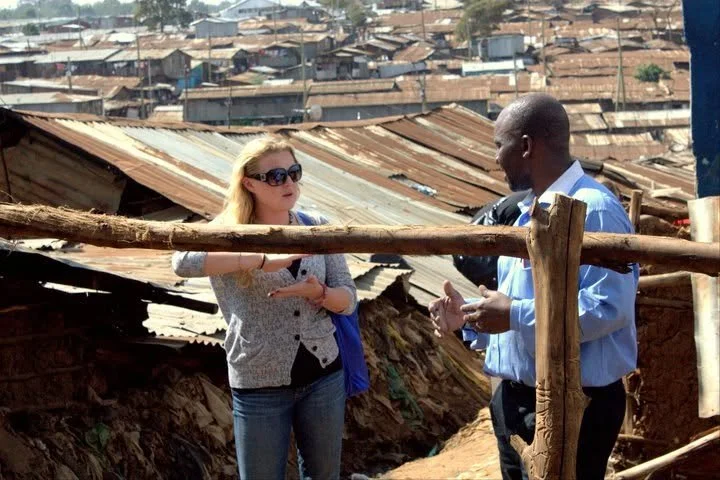
Jordan and Palestine: 2013-2016
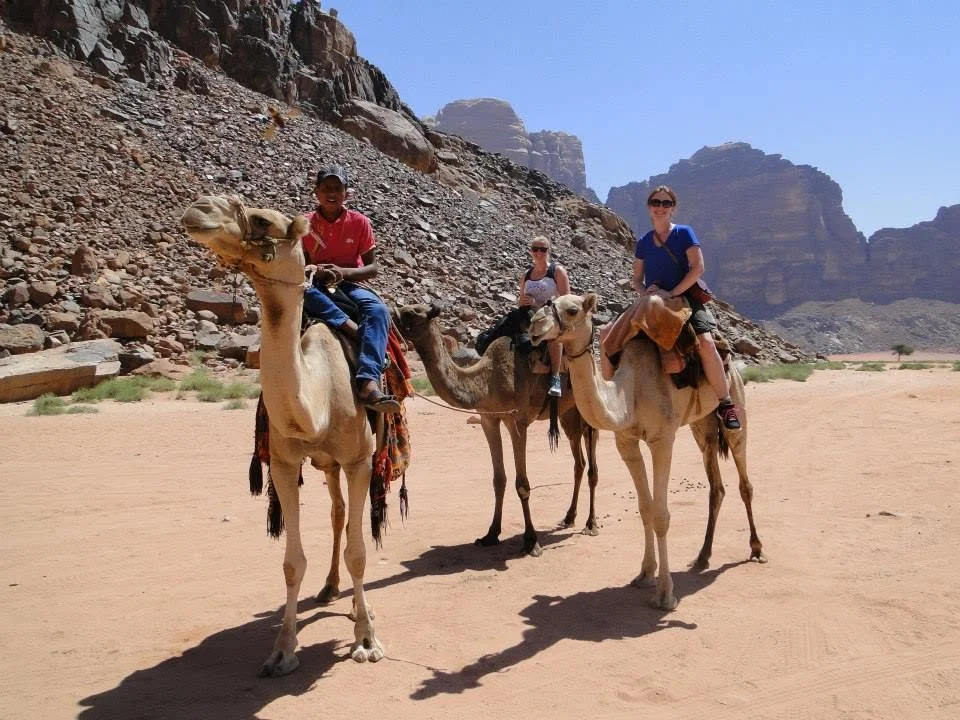
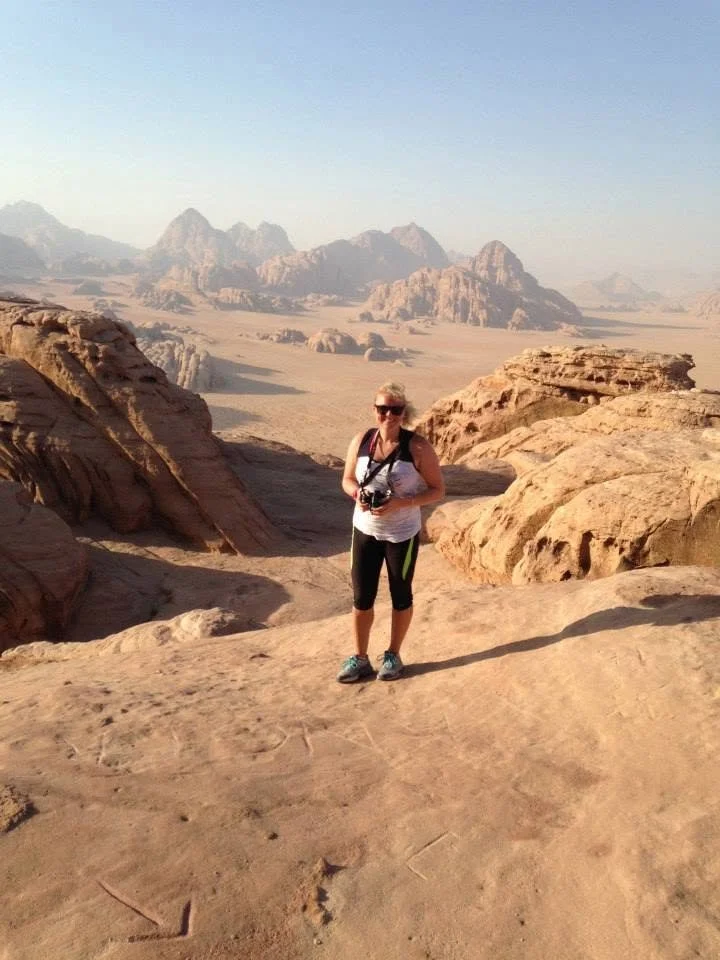
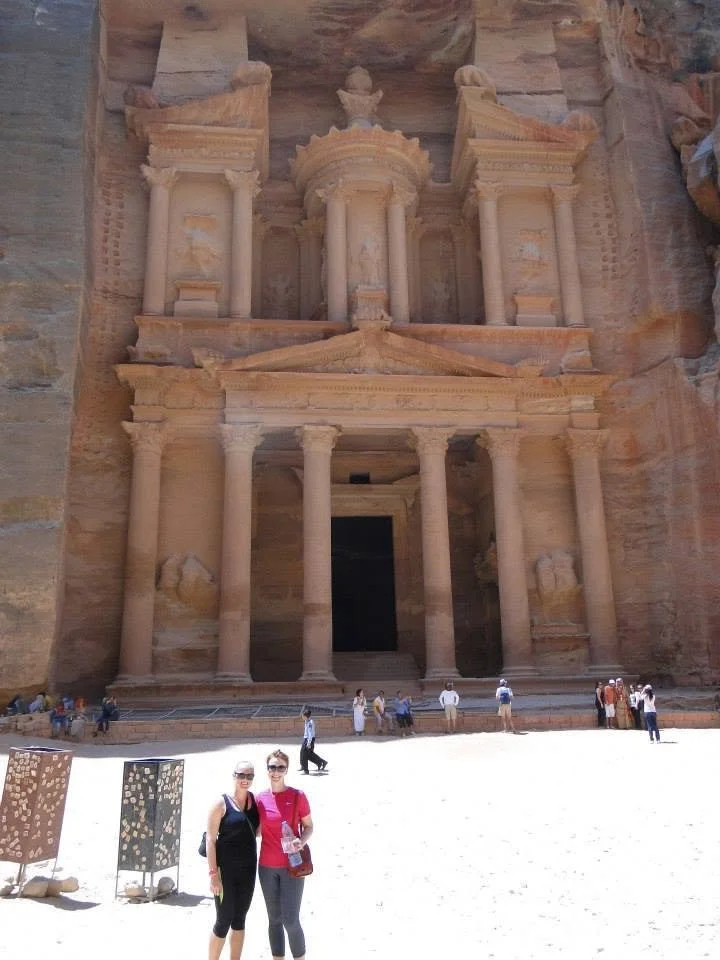
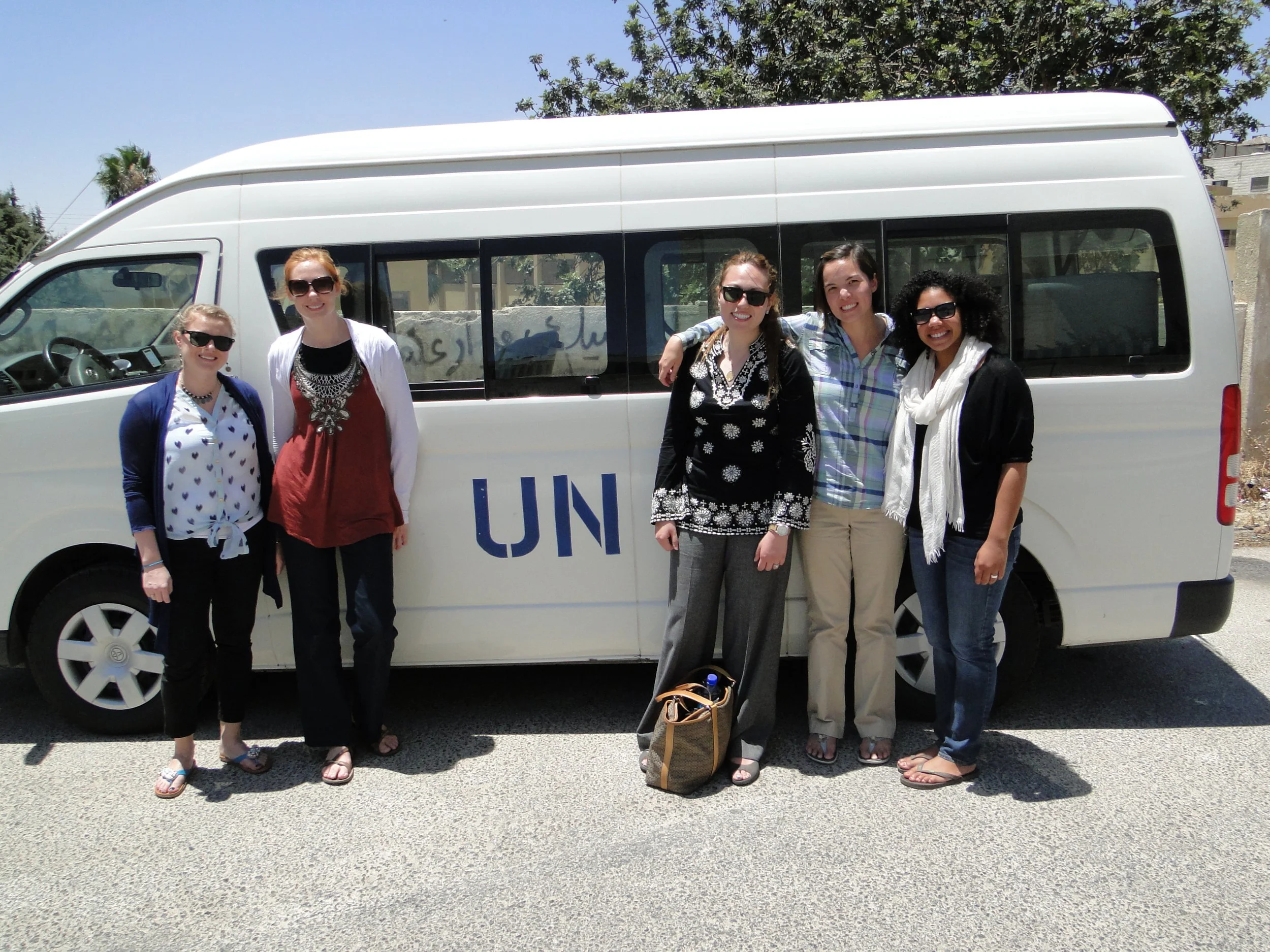
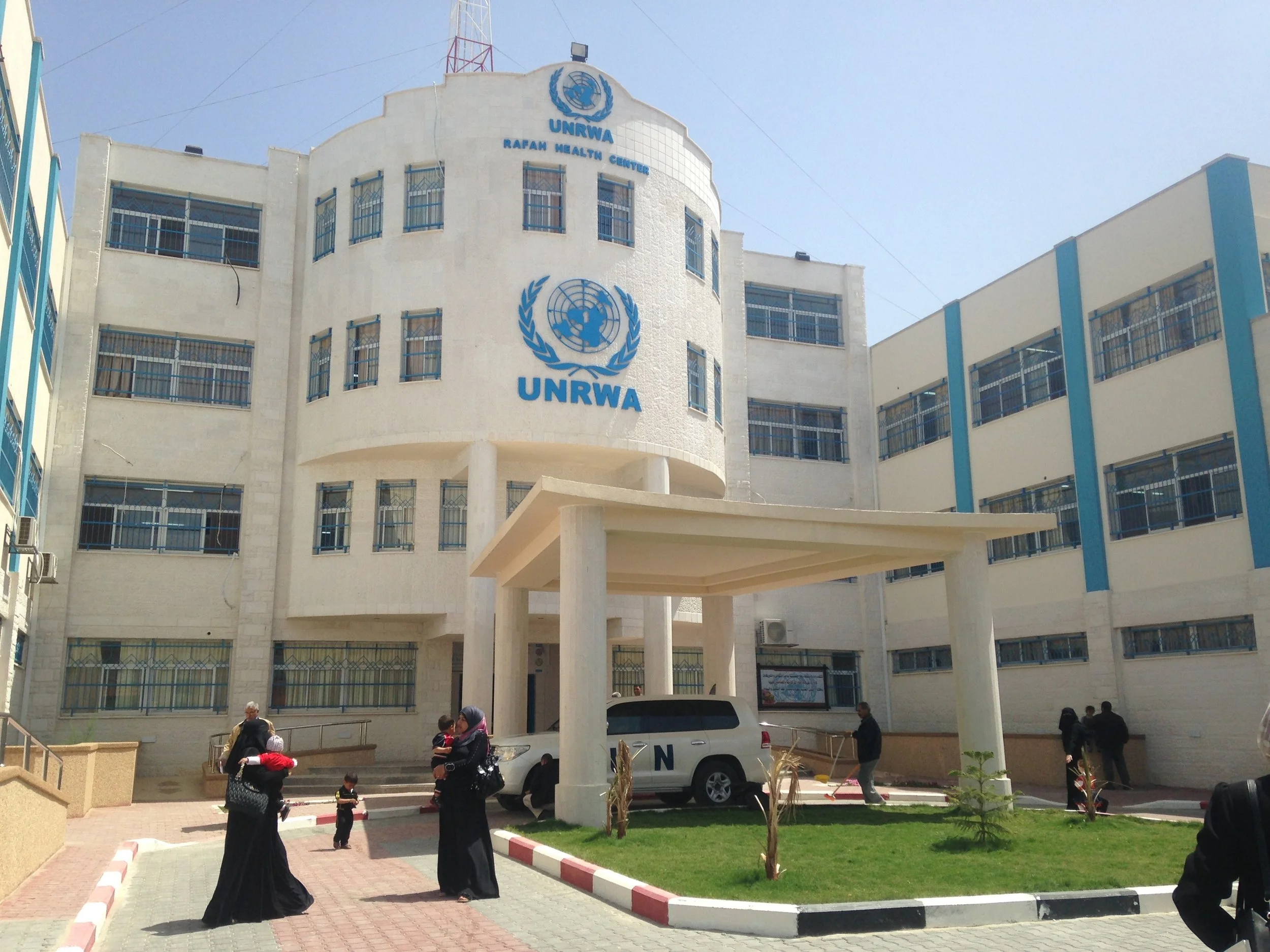
Two years after my summer in Nairobi, I found myself an intern in the Health Department at the UN Relief and Works Agency for Palestine Refugees in the Near East HQ in Amman, Jordan for my MPH global health practicum. As the primary provider of food, education, healthcare, and social services for over 3.5 million (at the time) Palestinian refugees living in camps in Jordan, Lebanon, Syria, Gaza and the West Bank, UNRWA's status as a UN agency is more on the radar these days, but to 28 year old Hannah, it was a random combination of letters.
I was not in Jordan to work at UNRWA. In fact, a month earlier, there had been an equal chance that I would have been in the Philippines, or Indonesia. My advisor was conducting a research study on the protective effect of Child Friendly Spaces on children's mental health and psychosocial wellbeing (MHPSS) in refugee camps, and of the three research sites, the camp for refugees fleeing the violence in Syria appeared to be the one on track to open soonest.
In a globally relatable fashion however, construction was delayed, and I spent my first couple of months in country conducting secondary data analysis out of my apartment. Eventually, my advisor set up the opportunity for me to do some real work with UNRWA for the remainder of my six month placement. It's hard to think about now, in 2026, but 14 years ago (omg) there was a lot less coverage of the 67 year occupation in Palestine (78 this year). Instead, much of the global news in the region was focused on the countries involved in the 2011 Arab Spring, and the devastating migration crisis that ensued. Horrific images and stories were regularly front page news, but the context of the region remained foggy for me.
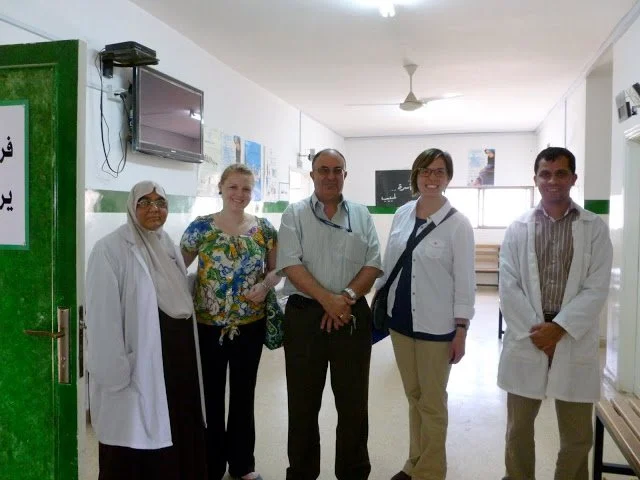
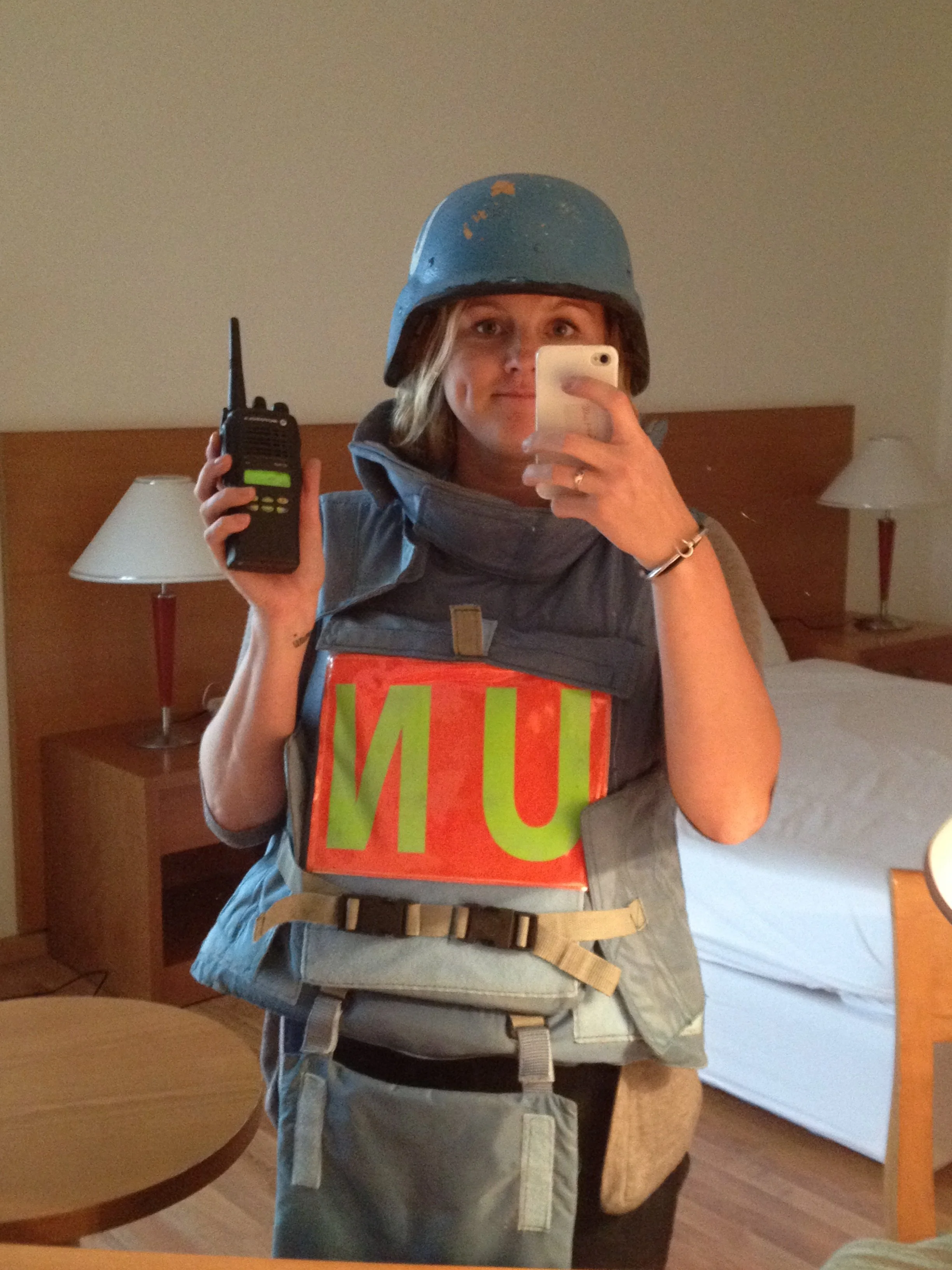
The whiplash I experienced at UNRWA as a result of the opportunities I had to visit camps and health centers in Lebanon, Jordan, the West Bank and Gaza was severe (access to Syria was all but impossible; my visa request was denied twice, even with a UN passport). I was appalled and bewildered at how I could have been so ignorant to the violence and power dynamics that led to the need for a dedicated UN agency in the first place. To supplement what I witnessed firsthand, I began devouring books and non-American news outlets, taking stock of how the manipulation of narratives based on the access granted to the storyteller could so successfully keep some of the smartest and most respected people in my life in the dark about the reality on the ground.
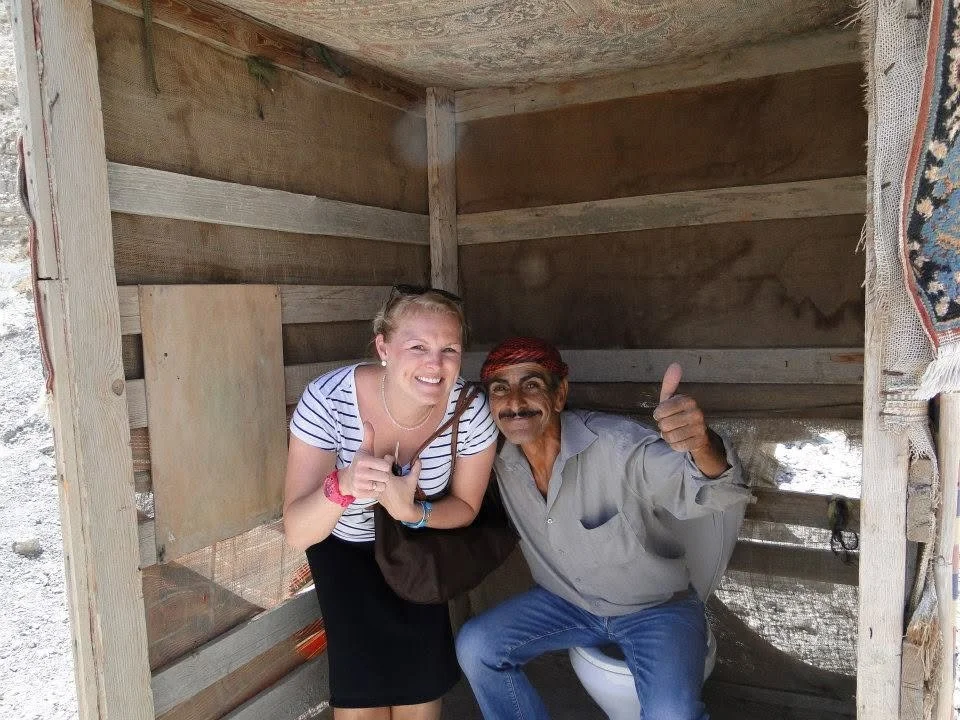
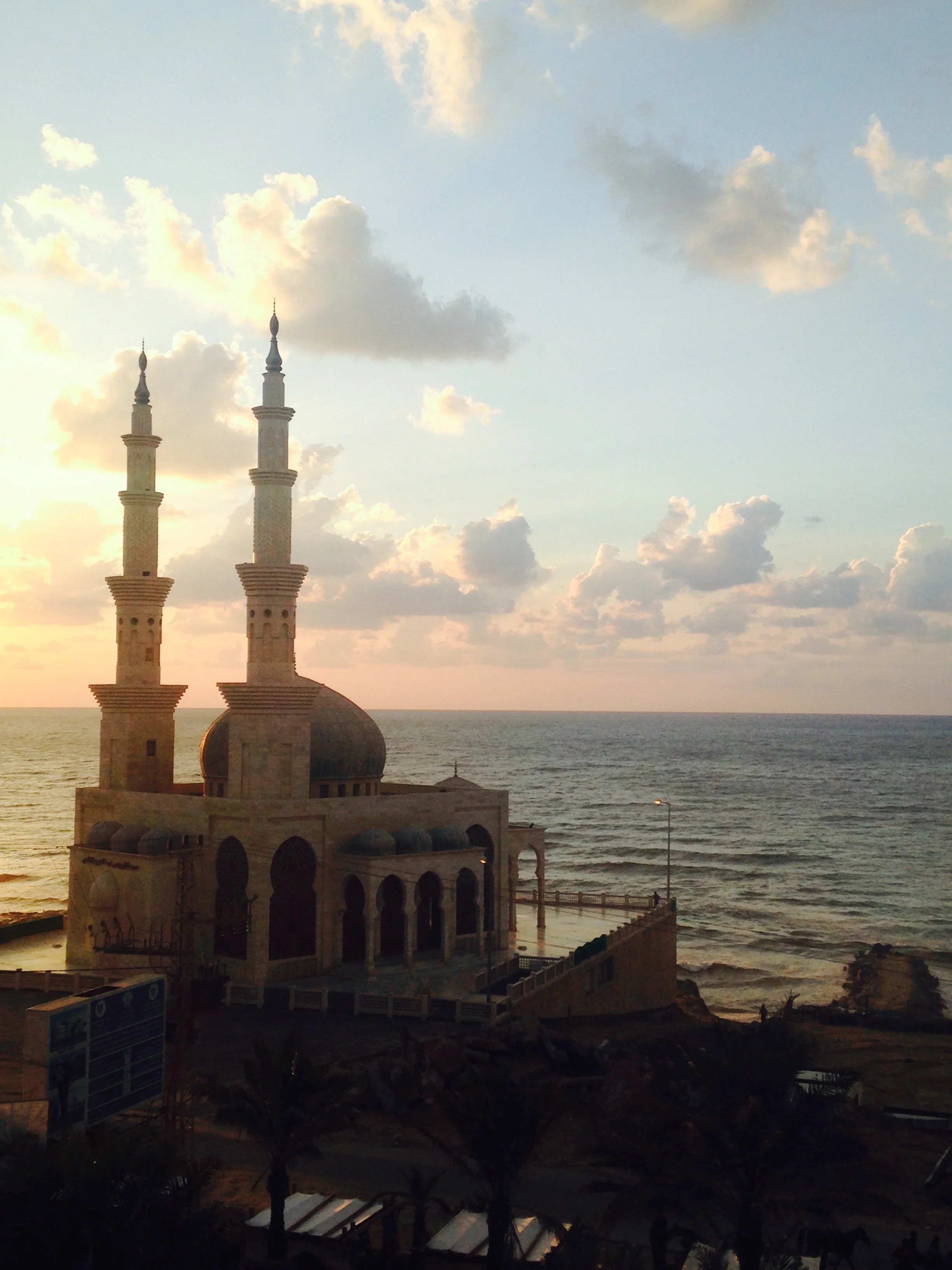
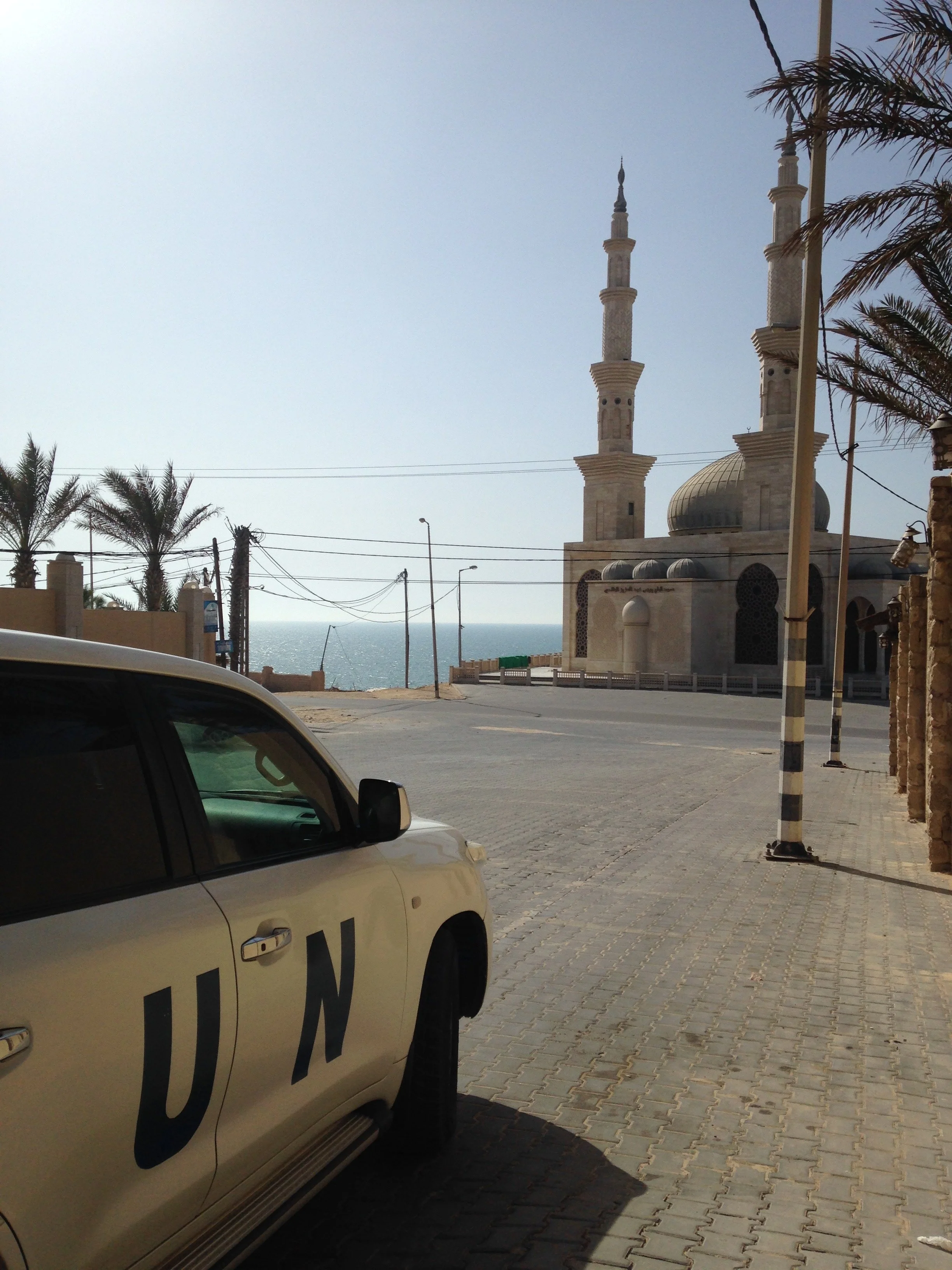
After graduation the following semester, I was offered a position in the health department that lasted another two years, where I had the privilege of working with, and learning from some of the most educated and resilient people I've ever met, and became intimately familiar with a small strip of land on the Mediterranean that to this day, few are granted the access to enter and leave with relative freedom.
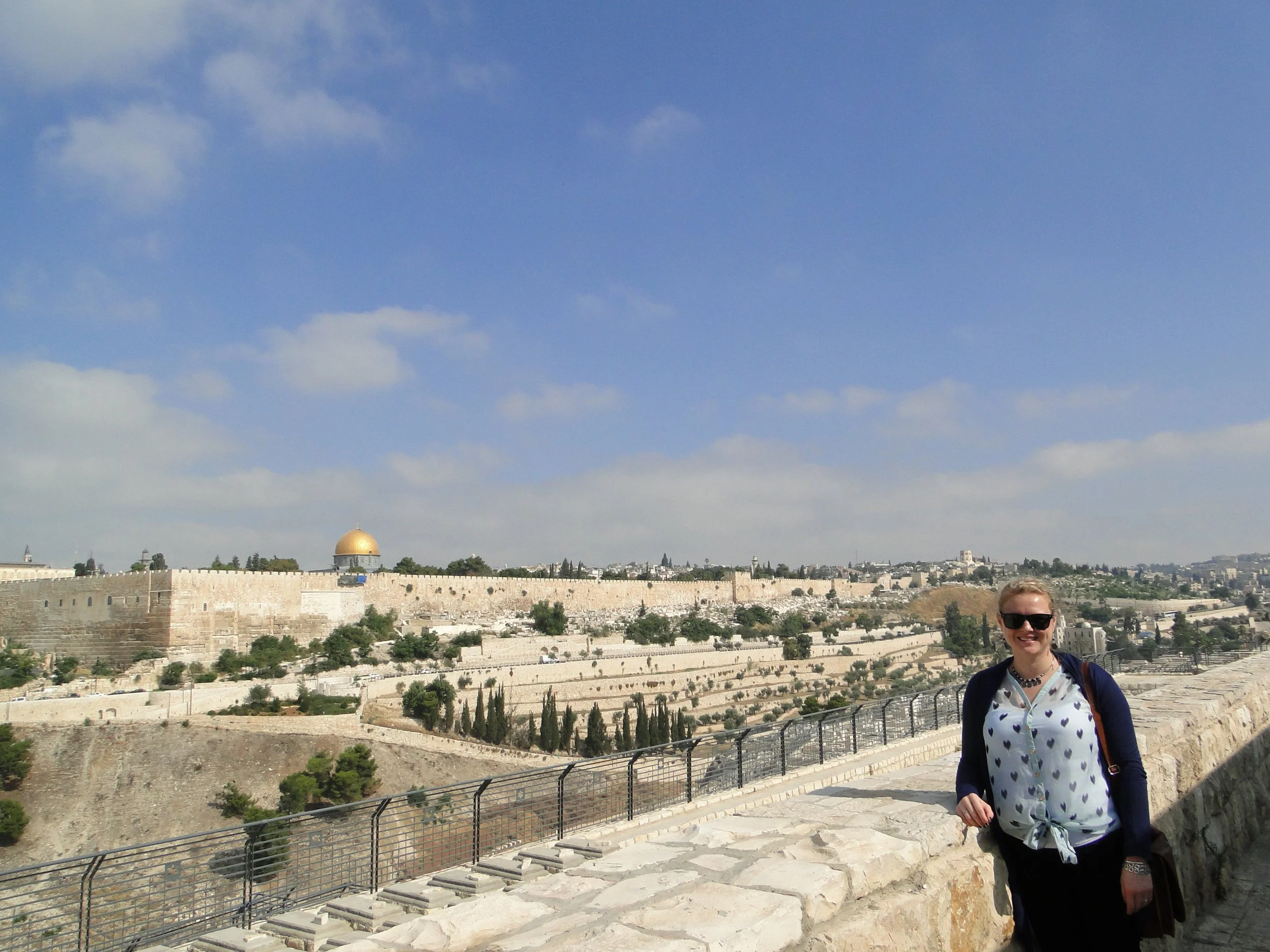
Two Things Can Be True
As with Kenya, my time at UNRWA was hard. It was a compounding wakeup call that snatched away the blanket of protection my citizenship, social class, and race had granted me. I don't regret my upbringing for one minute; I cherish the innocent, straight from a coming-of-age-movie memories I have of my childhood and teen years, before social media feeds and 24 hour news cycles made being uninformed a choice, not the default.
And. I am also so grateful for these two incredibly difficult, but ultimately enriching firsthand experiences that have given me ability to amplify the stories of those whose voices are too often silenced by money and power and special interests (I acknowledge the redundancy). I'm so grateful that my world view became more expansive, even if it casts a pall on the some of the things I used to enjoy before I knew better. It's a privilege to opt into (and out of) the harsh realities of our world, and those who can do it have a responsibility to use that knowledge to guide the way we choose to continue to live our lives.
Jordan and Kenya were always a part of my soul's journey
What I hadn't considered until writing this, is that I never really chose Kenya or Jordan. I never had one drop of interest in either of these places where I had two of my most formative adult experiences. I'm not even embarrassed to say that there's a good chance I couldn't have pointed to either of them on a map before I decided to travel there (to be fair, I've always been deficient in the geography department, though ACG has improved my skills greatly).
I went to Kenya because I came across the organization's table at an Idealist dot org career fair a few months after being laid off from my first miserable big girl job in Boston. I offhandedly asked if they took volunteers. They said yes.
I went to Jordan because the camp in the Philippines wasn't open yet. I ended up at UNRWA because the project I came to Jordan to work on was delayed, and my advisor made a phone call.
It's easy to call the series of events that brought me to each of these places coincidences, or not even see any serendipity. Looking back now, through the lens of everything I've learned over the last year, it's clear to me that these were actually a series of interventions that triggered my unique Uranus storyline.
I went through a crises of faith in both places. I made mistakes in both places. I rebelled against gender roles and cultural norms in both places. I saw the human and environmental evidence of the worst things that human beings can do to each other in both places. I questioned everything I thought I knew about everything I'd ever been taught. I had personal safety close calls in both places.
I also saw some of the most beautiful aspects of humanity in both places. I began traveling more, yearning for more experiences. I learned the importance of responsible use of resources, that human beings have many more commonalities than differences, and that love and sacrifice comes in all shapes and sizes, colors and religion. I homed in on my values, and I learned how to defend them with fact, and the rarity of my firsthand experience, not emotion. I also made friends who became family while away from home, and stayed a part of my chosen family for years afterwards.
In fact, Frannie, who I worked and shared an apartment with in Nairobi in 2011 (the Crack Filler to my Filled Crack, if you will) was partly responsible for my move to Richmond in 2020, and was with me on my 40th birthday trip in 2024, which I now consider the first domino in the reorientation of my entire life over the last 2 years.
Sam, who I shared an office with in Jordan, is still one of my dearest friends and we continue to cross paths all over the world. I've visited her home in Australia, and she's spent Christmas with my family in Massachusetts. We've slept in hammocks in Colombia, taken sunset boat rides in Italy, and even ended up in Bucharest, Romania on the same weekend in 2024, where she and Frannie finally got to meet.
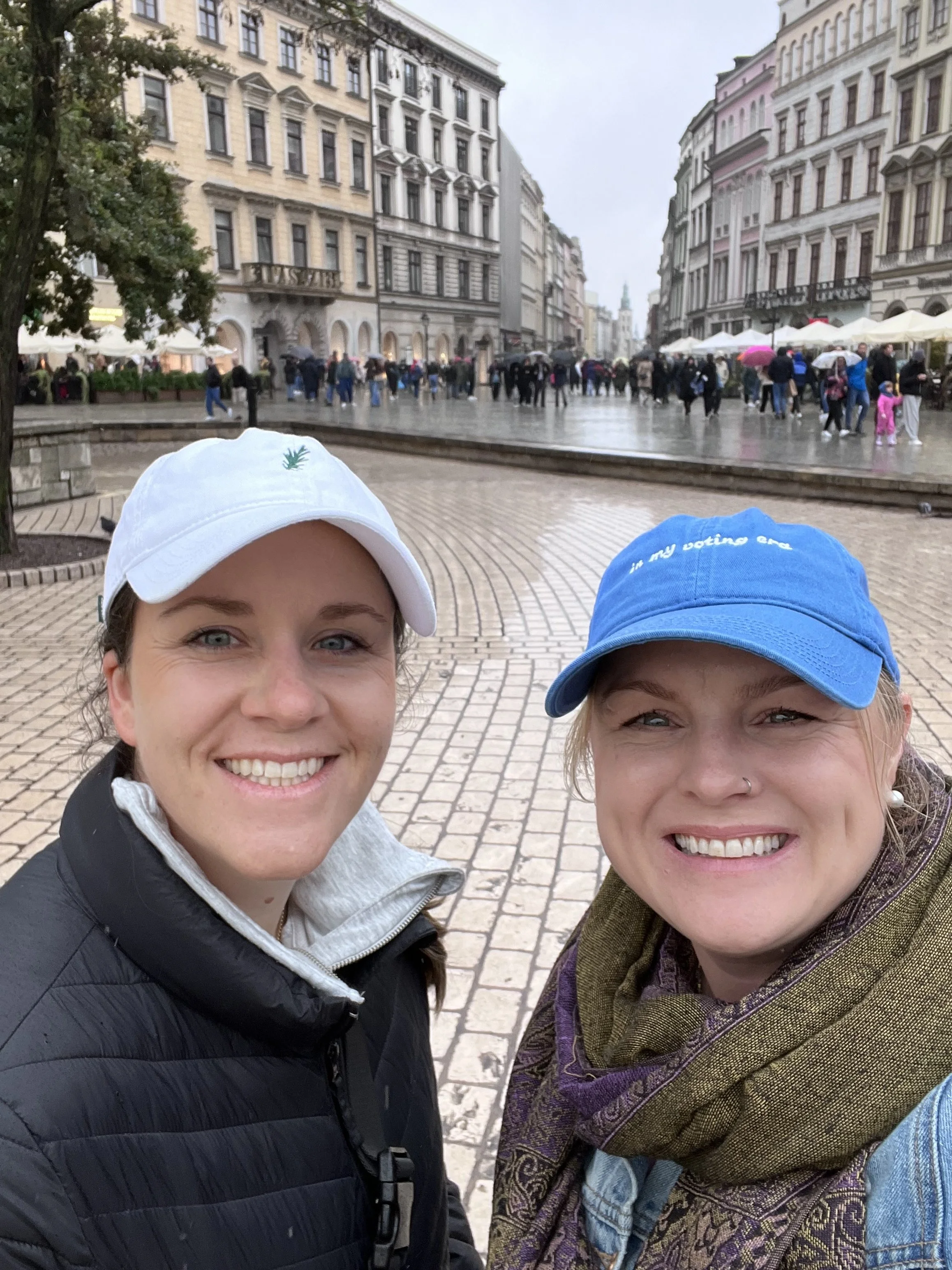
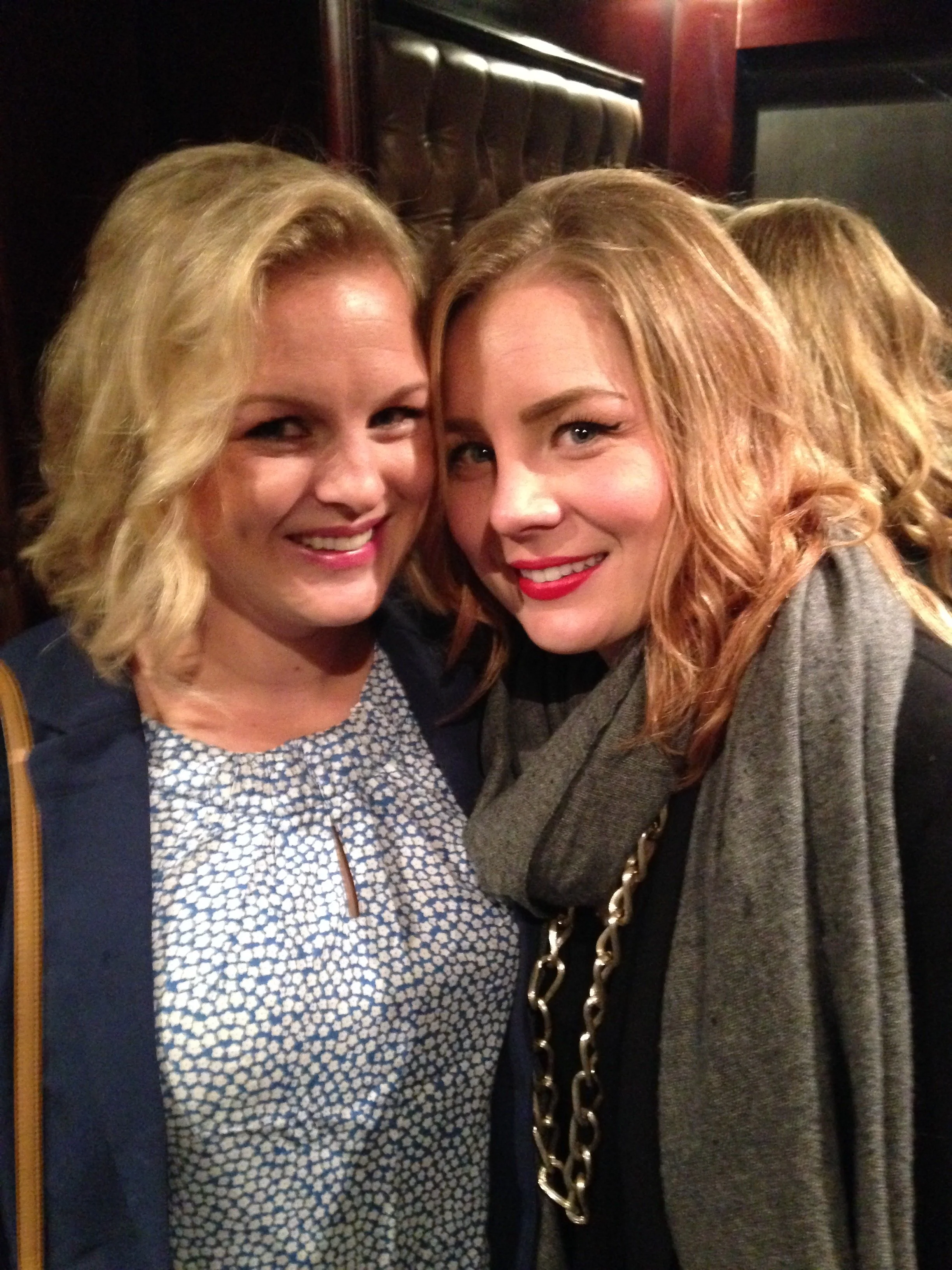
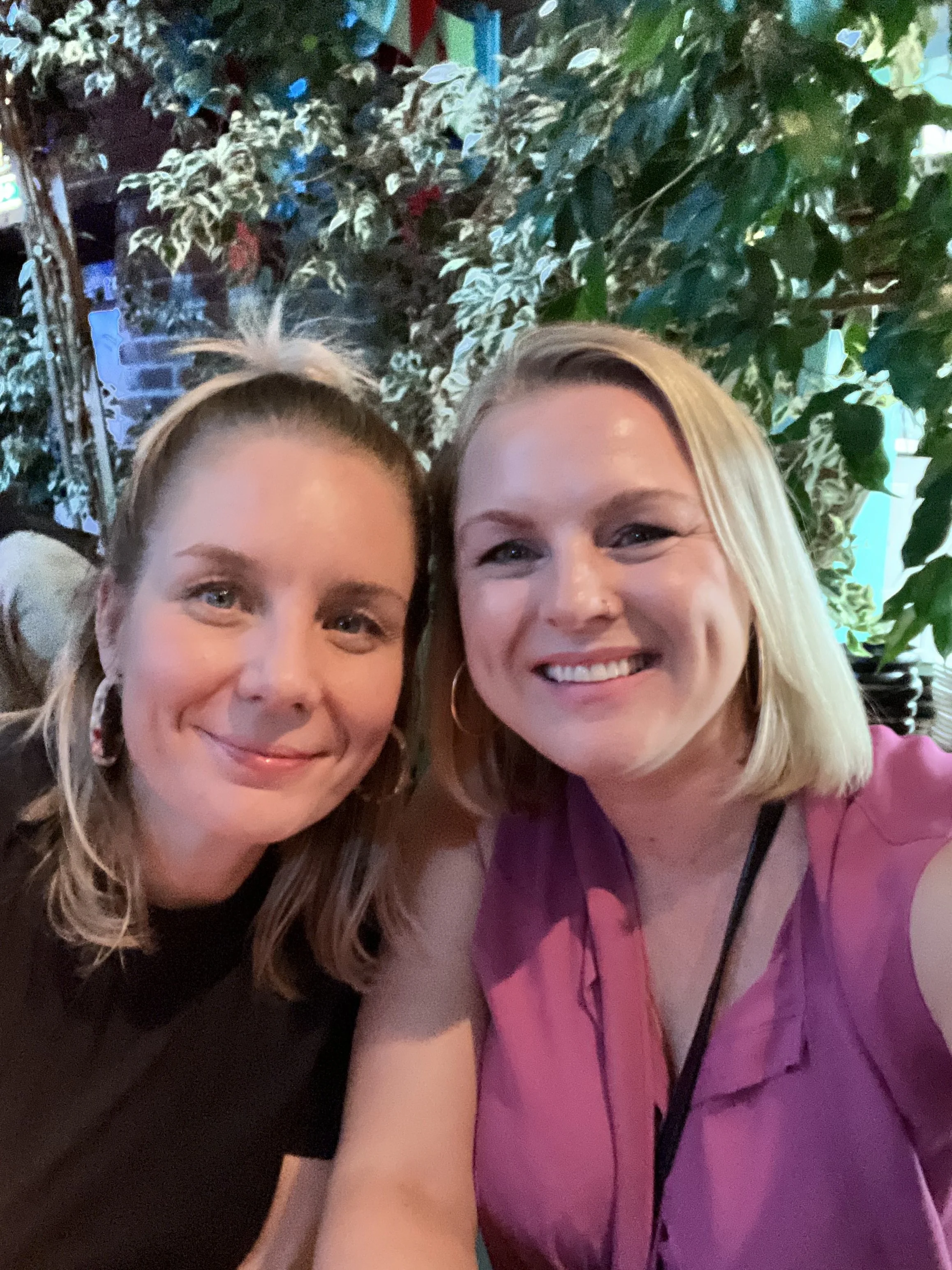
Despite what you might hear on TikTok, astrocartography isn't always about finding the happiest, easiest, most pleasurable places to travel and live. Each planet reveals a different storyline, and geography can unlock it - whether you're aware of it or not. And yes, sometimes those story lines will cause discomfort, but sometimes we need to be a little uncomfortable to grow.
Stay tuned for the next installment in this series, which dives into my experiences on my North Node MC line over the last 18 months. If you think Uranus was wild ride, you ain't seen nothin' yet.
The Receipts
While I remain committed to keeping the technical details out of the narrative story itself, I am happy to provide them for anyone who wants to go a bit deeper on the concepts of astrocartography.
As a general rule I don't love copy/pasting large blocks of direct quotes, but the software I use for ACG perfectly encapsulates the potential experiences one might have on a Uranus IC line, so I have included the most relevant bits below, verbatim.
While these AstroGold interpretations are written by real people, not AI, they still need to be interpreted in light of the individual chart, and any other lines and mitigating factors that may be relevant to the location.
Uranus Anticulminating (IC): "Inner restlessness that pushes you towards reinvention. It is as though the land itself nudges you to question what you have always believed about home, family, and personal security. You may find that your usual routines do not hold the same comfort here, and instead you feel energized to shake things up, clear space, or explore completely new ways of living. In this location, your sense of independence becomes stronger. This place rarely feels dull or settled, but it can feel incredibly awakening. Living or traveling here encourages you to redefine what home means to you. You learn that stability is not always about keeping things the same. Instead, it can be about trusting your own evolving nature and allowing your inner freedom to guide the way. In this location, you grow by embracing change rather than resisting it."
Orb of Influence: The energetic influence of planetary lines can be felt as far away as 600+ miles, but they are considered especially strong from 0-250 miles, and medium strength from 250-500 miles. Even for the most "positive" planets, spending too much time within intense zones can be unsettling.
Disclaimer: For the purposes of focusing on the Uranus archetype, I have not elaborated on the Moon DSC and Chiron MC lines, though they both provide additional layers to the overall experience of each location. For the sake of simplicity, I have not listed parens.
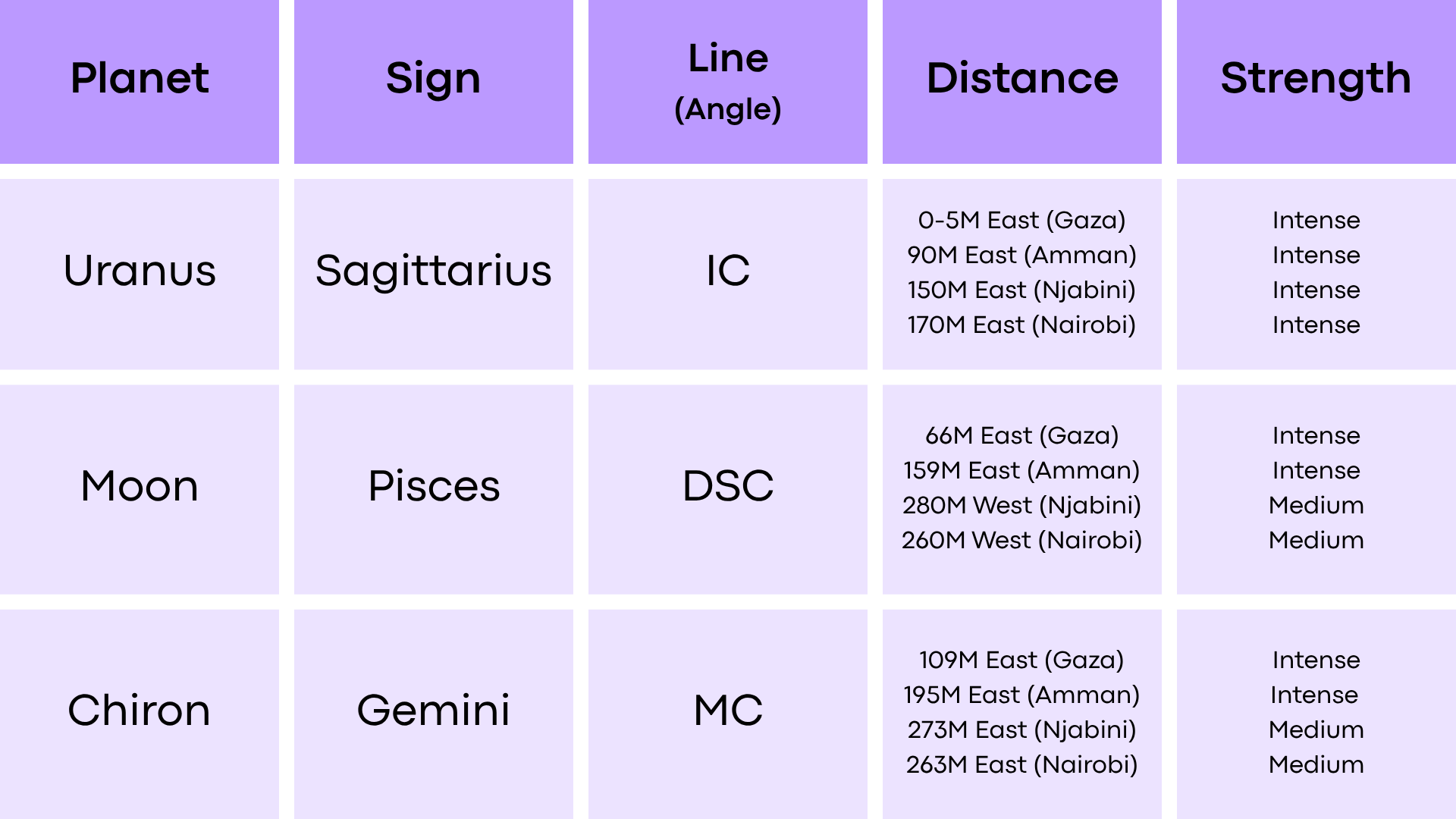
The Uranus influence was intense in both Jordan and Kenya, but Gaza was ground zero
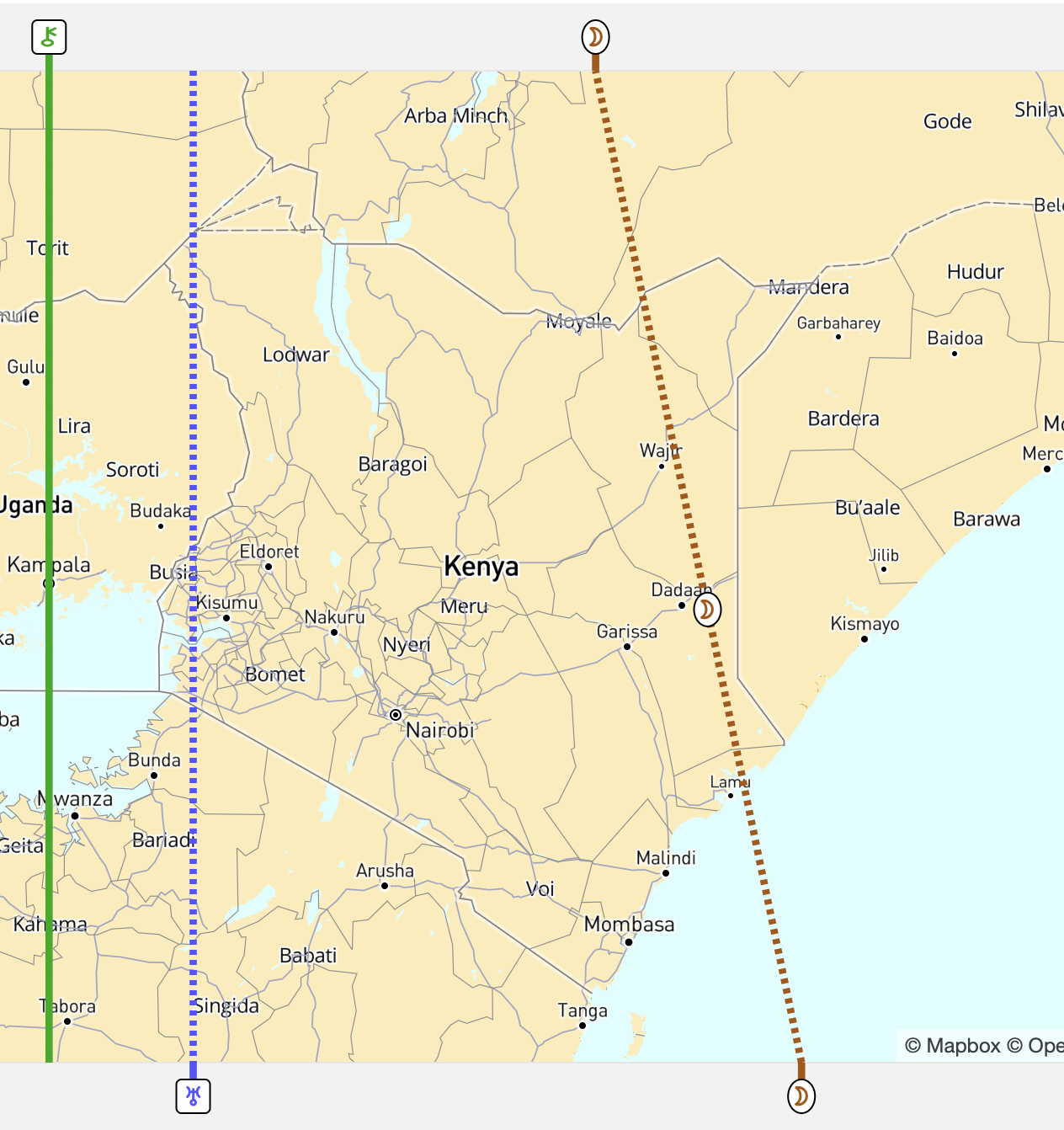
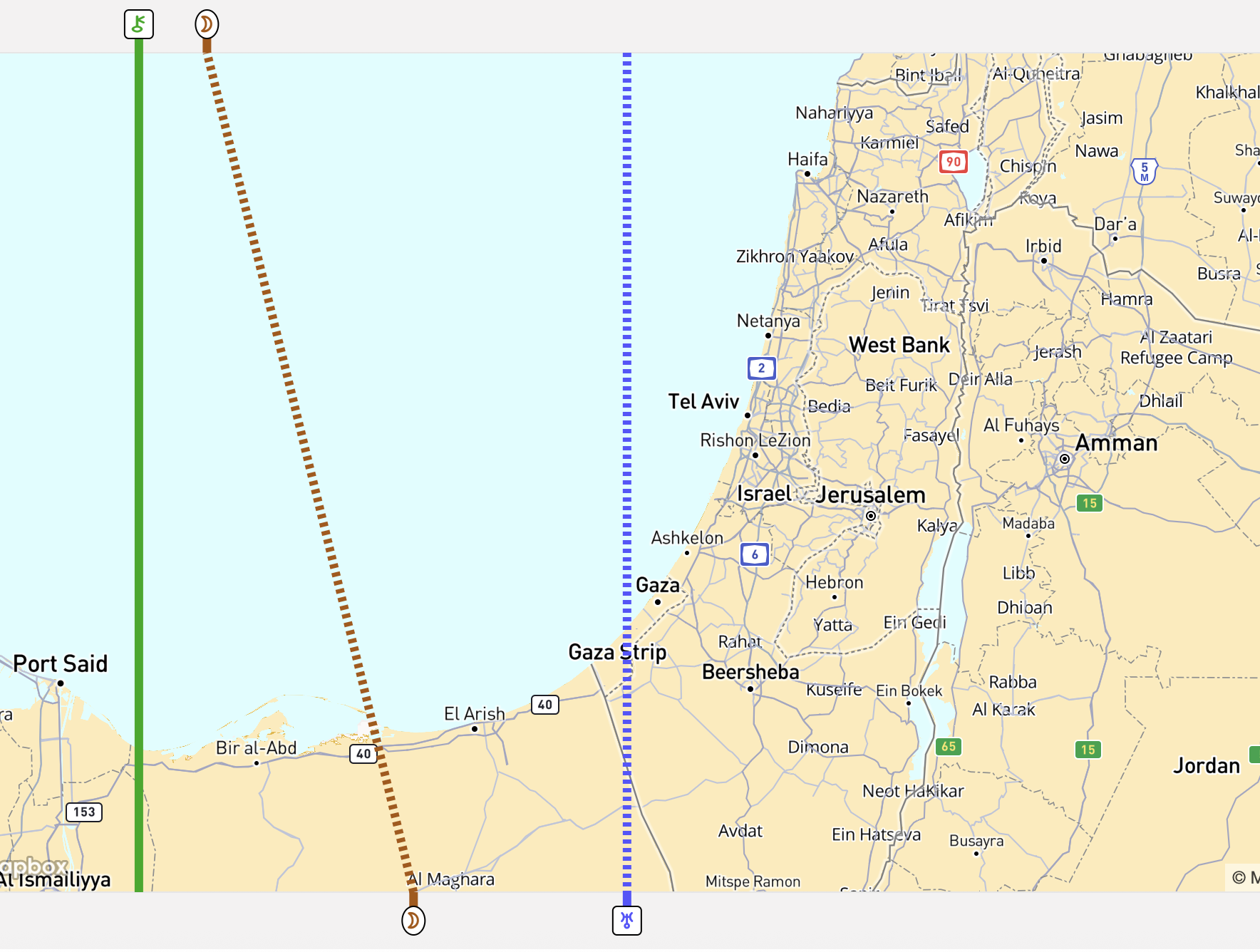
For those of you who are familiar with natal charts and/or ACG: my Moon squares Uranus and Chiron in my chart, while Uranus and Chiron are opposed, conjunct my ASC and DSC, natally. My MC is in my 9th house, so the moon isn't angular the way it is in the relocated charts for these locations. Aligning my Pisces Moon to the DSC in this part of the world further highlights the push and pull between these planets: the need for change and excitement, an incredibly sensitive and empathic desire for connection, a drive to heal others, but a deep discomfort about being seen and judged. It's.... a lot.
But even this 30,000 foot view (literally!) helps demonstrate the undeniable power of place, doncha think?